Introduction
Trezor.io/start is the official landing page used by cryptocurrency users to begin the setup process for their Trezor hardware wallets. Trezor devices are among the most trusted security tools in the digital asset ecosystem because they store private keys offline, keeping them safe from malware, phishing attacks, and online compromise. As cryptocurrencies grow in value and adoption, secure storage becomes a necessity rather than a luxury. Hardware wallets like Trezor offer a physical barrier between your keys and the internet, drastically lowering the risk of theft. This article explains the purpose of the Trezor onboarding portal, how the device works, and why it remains a popular choice for both beginners and experienced users.
By following the correct initialization steps, users can enjoy full control over their funds without relying on third-party custodians. The combination of transparent open-source software and hardened hardware design makes Trezor one of the most respected names in self-custody. Understanding the setup process helps ensure that your wallet remains secure from the moment it is unboxed.
What Makes Trezor Wallets Secure
Trezor hardware wallets use a dedicated microcontroller that isolates private keys from the computer or smartphone connected to it. Because the keys never leave the device, attackers cannot extract them even if the host machine is compromised. Every transaction must be manually verified on the Trezor screen, which prevents any unauthorized operation from being executed silently. This physical confirmation step is a major security advantage over software wallets, where transactions can be manipulated without the user noticing.
Another important aspect of Trezor security is its open-source architecture. Users and developers around the world can review the code, which reduces the chances of hidden vulnerabilities. Transparency builds trust, and Trezor has maintained a reputation for reliability by continuously improving both the firmware and the companion application.
Before You Start: Device Verification
Before beginning the setup process, it is essential to check that your Trezor device is brand new and properly sealed. If the packaging appears tampered with, you should stop immediately and contact the seller. Hardware wallets rely on a secure supply chain, and any compromise before initialization may put your funds at risk.
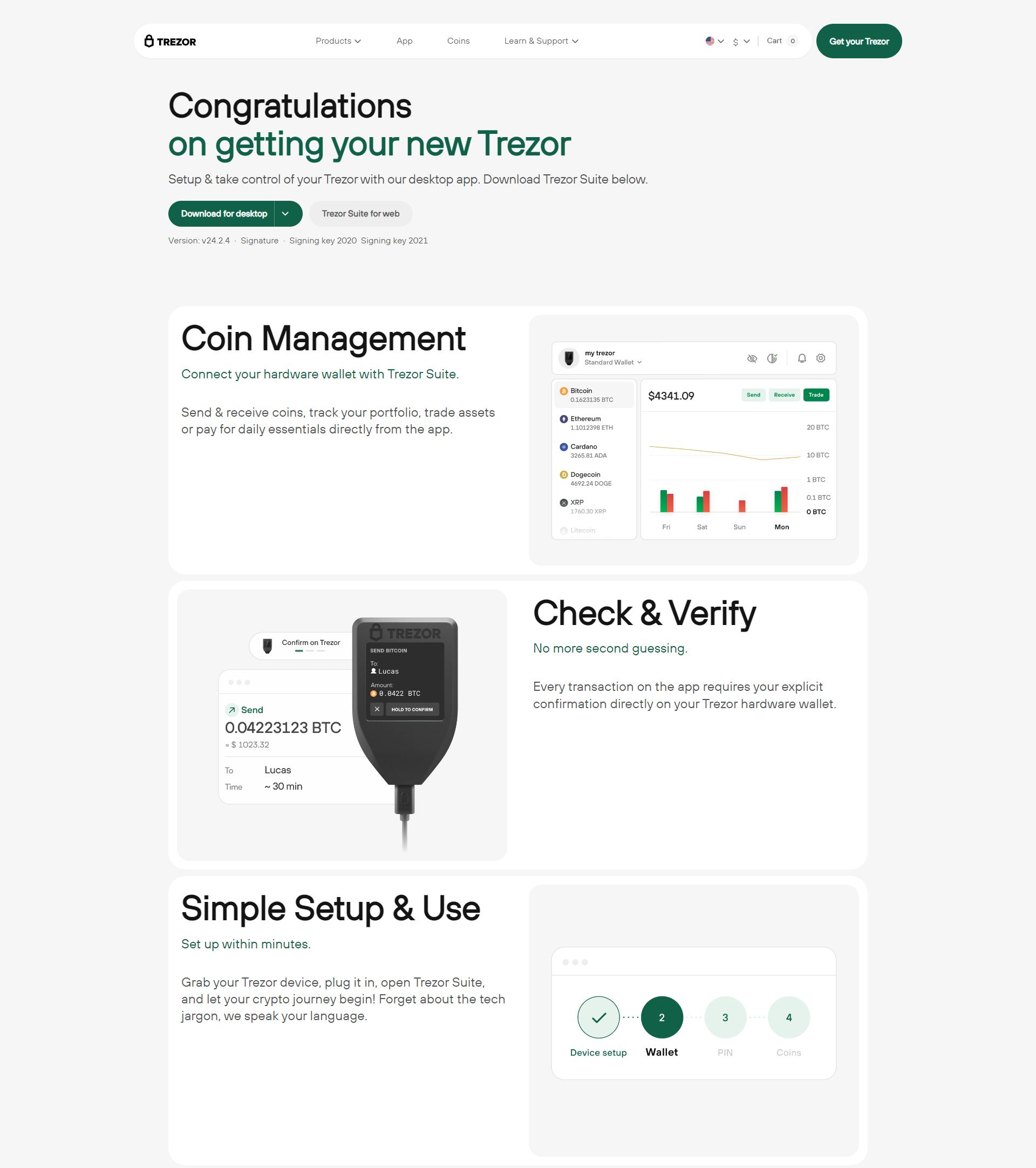
Once you confirm the device is genuine, visit the official onboarding portal and download the Trezor Suite application. Trezor Suite is the software used to configure the device, manage accounts, and interact with supported cryptocurrencies. It provides a clean interface and guides users through each step safely and clearly.
Initializing Your Trezor Device
During initialization, the device will prompt you to set a PIN code. This PIN protects the wallet interface and prevents unauthorized access if the device is lost or stolen. After the PIN is created, the device generates a recovery seed, usually consisting of 12 or 24 words. This seed is the master key to your wallet and must be stored carefully because it is the only way to restore access if the device fails.
Users are strongly encouraged to write the recovery words on paper or, preferably, on a metal backup plate designed to withstand fire and water damage. Digital storage such as screenshots, cloud services, or notes applications should be avoided because they expose the seed to online threats. Protecting the recovery phrase is equally important as protecting the hardware itself.
Managing Assets with Trezor Suite
After setup, Trezor Suite becomes your command center for managing cryptocurrencies. You can add accounts, check balances, send or receive funds, and view transaction history. The software supports a wide variety of assets and continues to expand as new coins gain popularity. All transactions still require physical approval on the device, ensuring that no action takes place without your consent.
Trezor Suite also integrates with decentralized applications and provides advanced features such as portfolio tracking, password management, and secure authentication. Even with these capabilities, private keys always remain protected inside the hardware wallet, maintaining the high level of security that Trezor is known for.
Best Practices for Long-Term Security
Even with a secure device, good habits are essential. Never share your recovery seed, never type it into websites, and avoid links that imitate the official Trezor portal. Keeping firmware updated helps protect against newly discovered vulnerabilities, and storing backups in multiple safe locations adds an extra layer of resilience.
Conclusion
Trezor.io/start provides a safe and trustworthy gateway for setting up one of the most secure hardware wallets available today. By combining offline key storage, manual verification, and transparent open-source design, Trezor offers a reliable solution for users who value self-custody. Proper initialization and responsible security practices ensure that your digital assets remain protected for the long term. As the cryptocurrency ecosystem evolves, hardware wallets like Trezor remain essential tools for anyone looking to manage their funds safely and independently.